Download Champions' AACR 2026 Poster #1884
Molecular determinants of sensitivity and resistance to the pan-RAS(ON) inhibitor daraxonrasib (RMC-6236) across KRAS-mutant patient-derived models
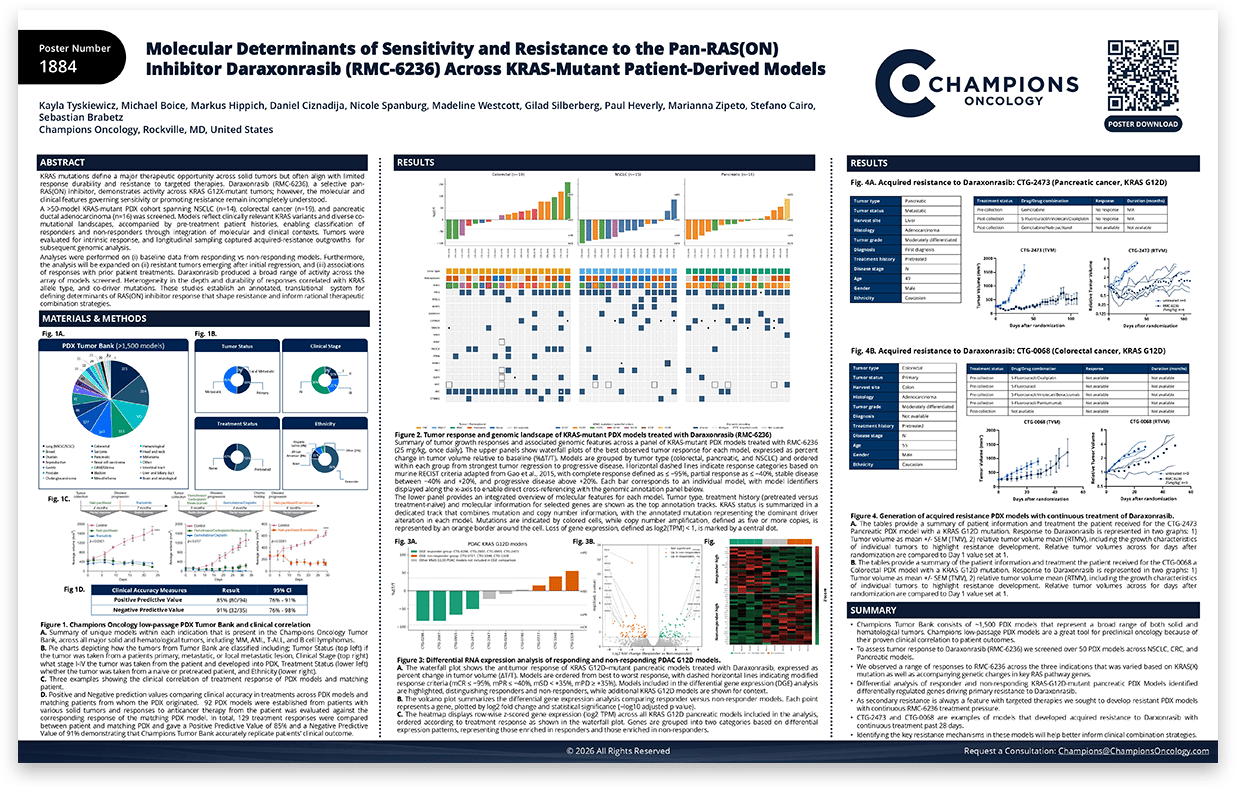
Poster #1884, presented at AACR 2026
KRAS mutations define a major therapeutic opportunity across solid tumors but often align with limited response durability and resistance to targeted therapies. Daraxonrasib (RMC-6236), a selective pan-RAS(ON) inhibitor, demonstrates activity across KRAS G12X-mutant tumors; however, the molecular and clinical features governing sensitivity or promoting resistance remain incompletely understood. We screened a >50-model KRAS-mutant PDX cohort spanning NSCLC (n=16), colorectal cancer (n=19), and pancreatic ductal adenocarcinoma (n=19). Models reflect clinically relevant KRAS variants and diverse co-mutational landscapes, accompanied by pre-treatment patient histories, enabling classification of responders and non-responders through integration of molecular and clinical contexts. Tumors were evaluated for intrinsic response, and longitudinal sampling captured acquired-resistance outgrowths for subsequent genomic analysis.We performed integrated NGS (omics) analyses on (i) baseline data from responding vs non-responding models, (ii) resistant tumors emerging after initial regression, and (iii) associations with prior patient treatments. Daraxonrasib produced a broad range of activity across the array of models screened. Heterogeneity in the depth and durability of responses correlated with KRAS allele type, co-driver mutations, and specific pre-treatment exposures. These studies establish an annotated, translational system for defining determinants of RAS(ON) inhibitor response that shape resistance and inform rational therapeutic combination strategies
Download the Poster