Download Champions' AACR 2020 Poster
2D Ex vivo patient-derived acute myeloid leukemia (AML) platform for evaluation of novel molecular targeted therapeutic agents
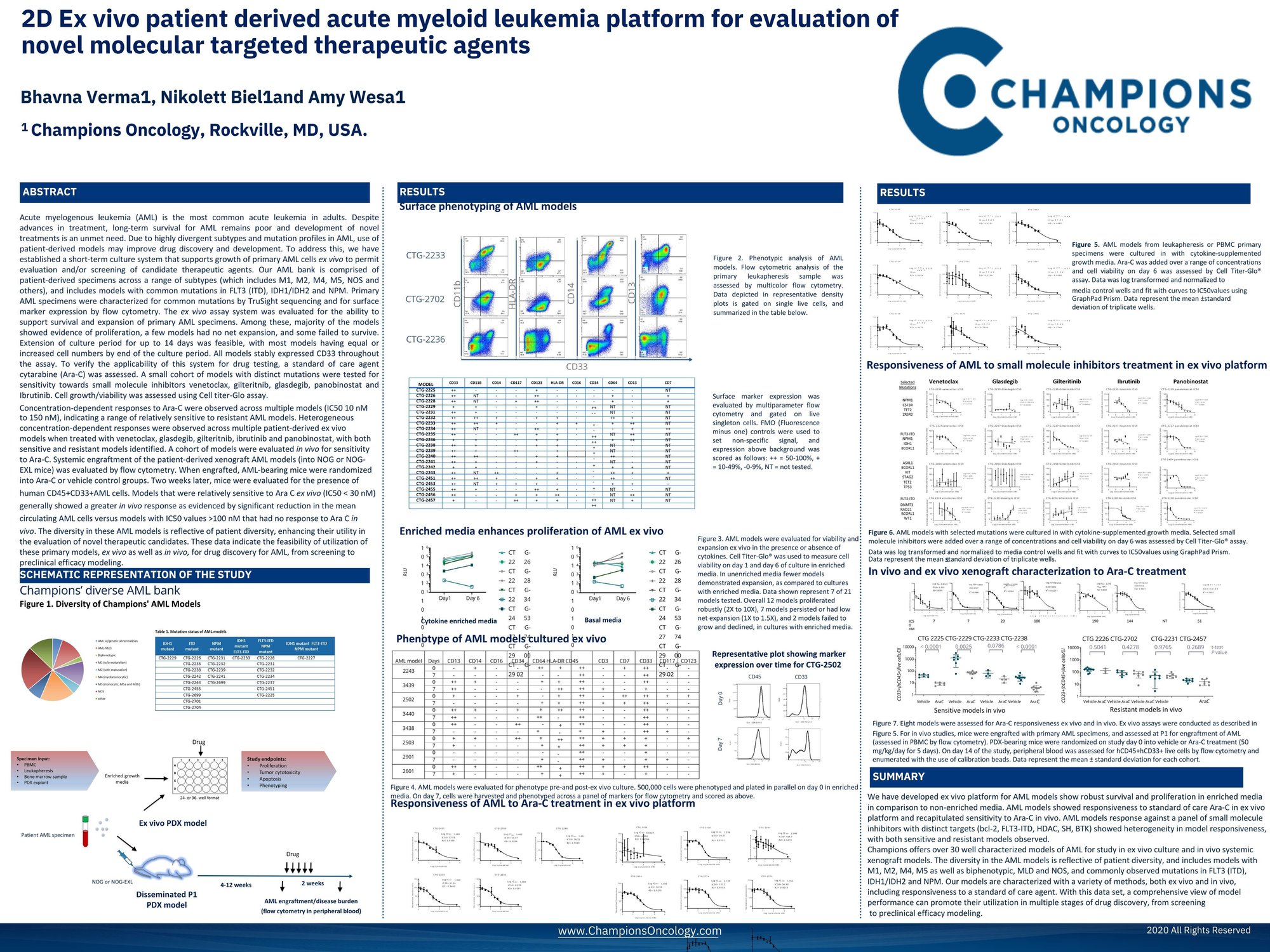
Acute myelogenous leukemia (AML) remains the most common acute leukemia in adults, with poor long-term survival despite treatment advances. Due to its diverse subtypes and mutations, patient-derived models are essential for drug discovery. We established a short-term culture system to support the growth of primary AML cells for therapeutic screening. Our AML bank includes specimens from various subtypes (M1, M2, M4, M5, NOS) and mutations (FLT3 ITD, IDH1/IDH2, NPM), characterized by TruSight sequencing and flow cytometry. The culture system successfully supported survival and expansion in most models, with cultures extending up to 14 days while maintaining stable or increased cell numbers and consistent CD33 expression.
-
The culture system was tested with the standard of care agent cytarabine (Ara-C) and small molecule inhibitors (venetoclax, gilteritinib, glasdegib, panobinostat, and ibrutinib), showing concentration-dependent responses in AML models with varying sensitivity, from sensitive to resistant.
-
In vivo sensitivity to Ara-C was evaluated using patient-derived xenograft (PDX) AML models in NOG or NOGEXL mice. Models sensitive to Ara-C ex vivo (IC50 < 30 nM) showed a significant in vivo response, with reduced circulating AML cells, while resistant models (IC50 > 100 nM) showed no response.
-
These results demonstrate the feasibility of using primary AML models for drug discovery, providing a valuable platform for screening and preclinical efficacy testing, reflecting patient diversity and aiding the evaluation of novel therapeutic candidates.