NSCLC
Rank models by response to a TROP2 ADC (datopotamab deruxtecan), then cross-filter by EGFR, KRAS, MET, and prior EGFR-targeted therapy. Models with similar TROP2 expression can respond differently, so observed response guides selection.
ADC development is expanding quickly across targets, payloads, and tumor types, and target expression alone does not tell the whole story of which models will respond.
Our PDX portfolio includes 1,500+ models across 12 targets, with 250+ benchmarked against clinical ADCs, in vivo. This gives you the opportunity to select models on observed response, in the context of target expression, molecular features, and treatment history, ahead of evaluating your own molecule where comparator data exist.
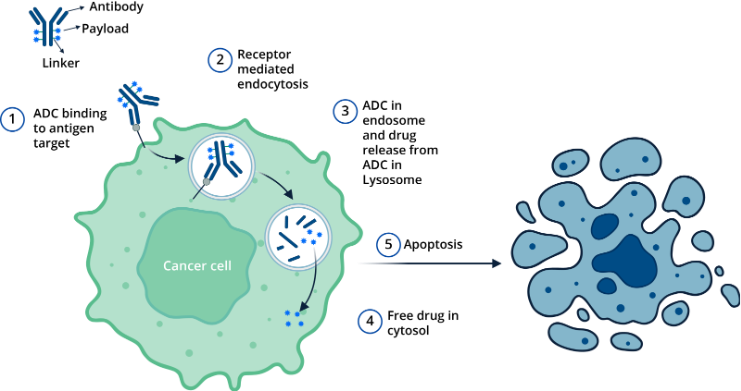
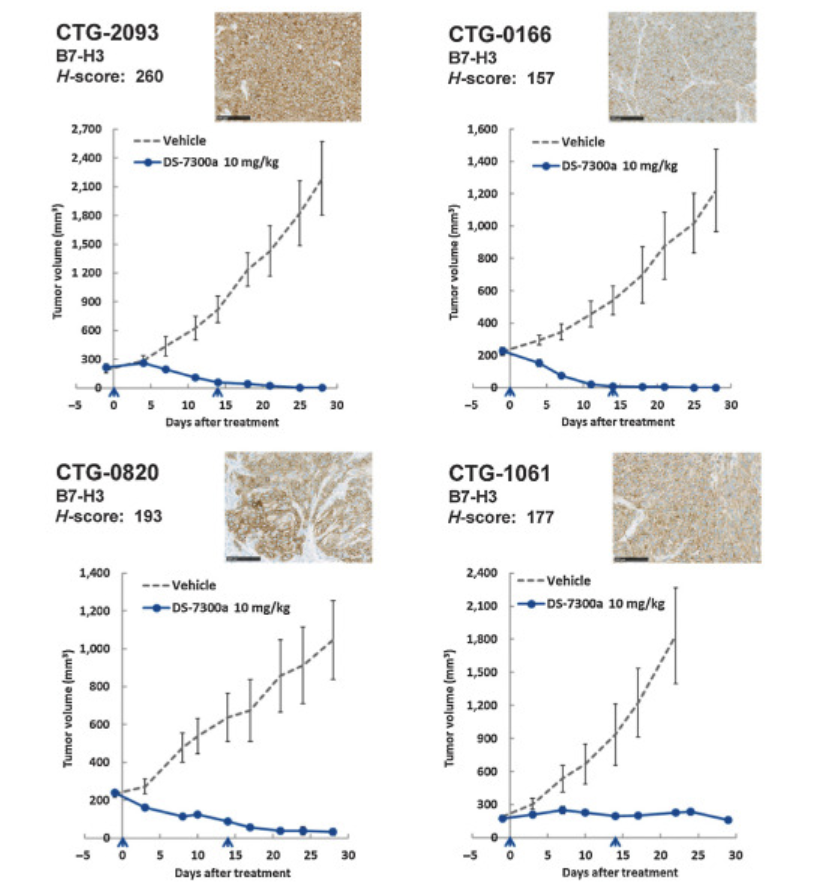
Published example: Daiichi Sankyo's ifinatamab deruxtecan (DS-7300), a B7-H3 ADC, was benchmarked across Champions' PDX models to characterize its in vivo efficacy during preclinical development.¹
We pair observed ADC response with genomic, expression, and treatment-history data so you can choose models that match the biology and clinical context of your program.
Rank models by response to a TROP2 ADC (datopotamab deruxtecan), then cross-filter by EGFR, KRAS, MET, and prior EGFR-targeted therapy. Models with similar TROP2 expression can respond differently, so observed response guides selection.
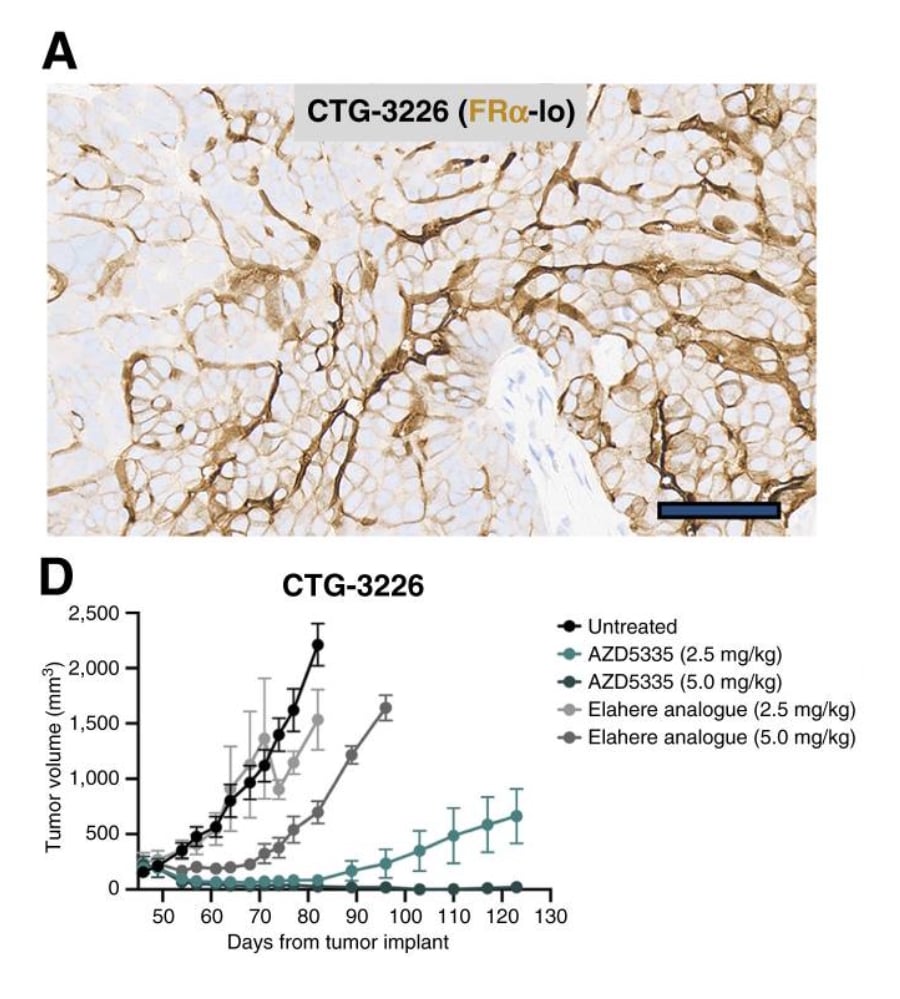
FRα expression anchors an approved companion diagnostic. We combine FRα IHC with in vivo response, platinum sensitivity, and resistance-associated features such as ABCB1 and ABCC1 expression.
Published example: AstraZeneca’s AZD5335, a novel FRα-targeted TOP1-inhibitor ADC, was evaluated across Champions’ PDX models during its preclinical development.²

Bispecific ADCs
We can identify models that express both of your targets, e.g., models expressing both EGFR and HER3.
Emerging targets
For HER3 and B7-H4 we identify models with relevant expression; for NaPi2b, in vivo response data are available for benchmarking.
Novel payloads
Our ex vivo platform assesses payload sensitivity independent of the intact ADC.
Published example: ABL Bio's ABL206, a B7-H3 × ROR1 bispecific ADC, was evaluated across Champions' PDX models and has advanced to Phase 1 testing in solid tumors.³ Tubulis's TUB-040, a NaPi2b ADC, was evaluated across ovarian and NSCLC PDX models.⁴

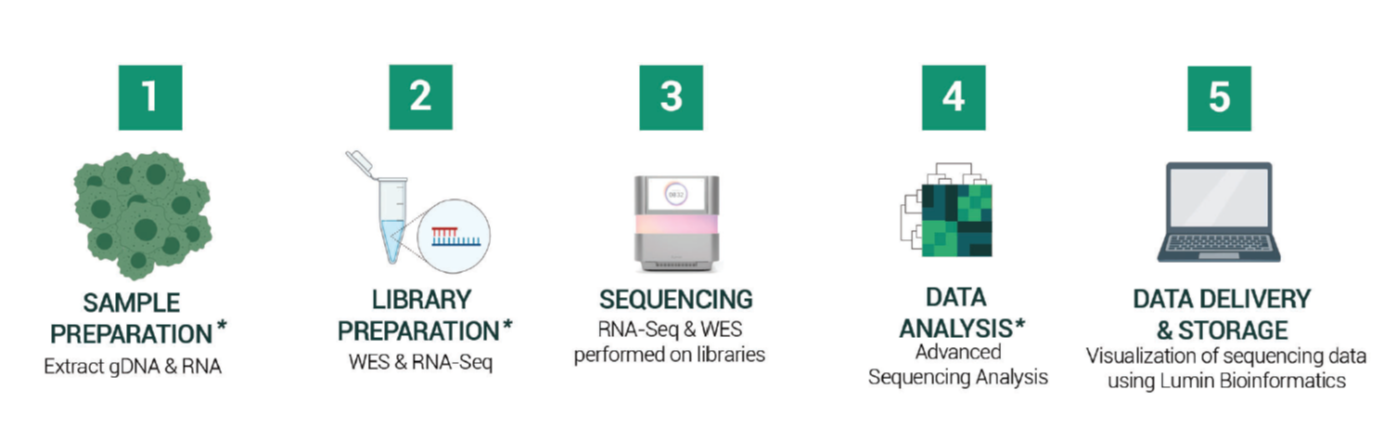
This comes at no cost, so budget is committed only once the shortlist is right.
From there we scope the study: IHC/TMA, surface proteomics, an in vivo PDX panel, or ex vivo payload screening.

On-Demand Webinar
Yamato M, Hasegawa J, Maejima T, et al. DS-7300a, a DNA Topoisomerase I Inhibitor, DXd-Based Antibody-Drug Conjugate Targeting B7-H3, Exerts Potent Antitumor Activities in Preclinical Models. Mol Cancer Ther. 2022;21(4):635-646. doi:10.1158/1535-7163.MCT-21-0554
Zoeller JJ, Tammali R, Dodd RB, et al. Derivation of AZD5335, a Novel FRα-Targeted TOP1i-Loaded ADC, for the Treatment of FRα-Expressing Cancers. Clin Cancer Res. 2025;31(24):5261-5275. doi:10.1158/1078-0432.CCR-25-1749
Kwon JA, Lee S, Kim J, et al. Preclinical development of ABL206, a novel bispecific antibody-drug conjugate targeting B7-H3 and ROR1. MAbs. 2026;18(1):2731283. doi:10.1080/19420862.2026.2731283
Vogl AM, Schmitt S, Mai I, et al. TUB-040, a Homogeneous and Hydrophilic NaPi2b-Targeting ADC with Stably Linked Exatecan, Exhibits Long-lasting Antitumor Activity and a Well-Tolerated Safety Profile. Mol Cancer Ther. 2025;24(11):1685-1700. doi:10.1158/1535-7163.MCT-25-0254

Get started
Tell us your target and indication, and we will identify the models we have, how they have performed against clinical ADCs, and the context that matters for your decision, so you move into in vivo work with evidence in hand.