
Preclinical Oncology
Humanized Mouse Models for Immuno-Oncology Research
Cutting-edge humanized mouse models tailored to harness the power of the human immune system and unveil the full potential of your preclinical immunotherapy research
Overview
Superior Humanized PDX Models and CDX Models
Champions’ humanized mouse tumor models provide a powerful platform for studying cancer in a controlled environment. With the largest fully characterized clinically relevant bank of PDX models in the industry and access to cutting-edge humanized mouse models, Champions is uniquely positioned to accelerate the development off immuno-oncology therapies. These models, developed through advanced techniques in humanization, help bridge the gap between xenograft vs syngeneic studies, offering more precise insights into the effectiveness of immuno-oncology treatments.
Champions Oncology supports your preclinical immuno-oncology (IO) research by providing, beyond the basic syngeneic models, cutting-edge humanized mouse model solutions specific for human immune targets. Multiple options are available to investigate and harness the human immune system in your studies:
Engraftment of cell therapies such as CAR T, CAR B, CAR NK, CAR macrophages, and DCs into the murine host
Adoptive transfer of Human PBMCs and NK cells in our PBMC ImmunoGraft® and NK ImmunoGraft® models: ideal for antibody-based therapeutics, and agents targeting T cells or NK cells
Engraftment of CD34+ hematopoietic stem cells from cord blood for full reconstitution of the human immune system in our CD34 Cell ImmunoGraft®
Trusted platform
Preferred Platform for Preclinical Immuno-Oncology Drug Testing
By leveraging different transgenic mouse strains, we provide access to mouse models reconstituted with a fully functional human immune system including T and B lymphocytes, myeloid cells, macrophages, DCs, and NK cells. In partnership with TransCure BioServices, we offer customizable gene delivery through hydrodynamic boosting, which promotes differentiation into different human immune populations.
This innovative platform allows clients to evaluate the efficacy, pharmacodynamics, and mechanisms of action of various cancer therapeutics that modulate human immunity, such as checkpoint inhibitors, monoclonal and bispecific antibodies, cancer vaccines, cytokine-based therapies, and combinatorial treatments.
Testimonials
"The biologically relevant tumor microenvironment in Champions' humanized models has greatly enhanced our ability to assess drug responses and uncover novel therapeutic targets."
Head of Preclinical Development, Pharmaceutical Company
"Champions' humanized PDX models have given us a highly relevant platform for studying human-specific tumor interactions, which has been critical for evaluating our therapeutic approaches and optimizing treatment strategies."
Sr. Director of Immuno-oncology, Biotech Company
"The biologically relevant tumor microenvironment in Champions' humanized models has greatly enhanced our ability to assess drug responses and uncover novel therapeutic targets."
Head of Preclinical Development, Pharmaceutical Company
Get started
Ready to start working with Champions Oncology?
Resources
Explore our resources
A Comparison of Syngeneic & Humanized Models in Oncology Research
Syngeneic mouse models are preclinical in vivo models used to evaluate therapeutic candidates in mice with intact immune system. Humanized mouse models support the engraftment of many functional components of the human immune system. This Quick Guide gives a comparison of the two models and weighs the benefits and challenges of these models for oncology research.
FAQ
Frequently Asked Questions
Humanized PDX model development services typically include:
-
Human Immune System Reconstitution: The introduction of human immune cells, such as hematopoietic stem cells or peripheral blood mononuclear cells (PBMCs), into the mice.
-
Testing different immune cell donors: Leveraging different donors allows accounting for donor variability.
-
Tumor Implantation: Implanting patient-derived tumor tissues into the humanized mice.
-
In Vivo Monitoring: Regular assessment of tumor growth and immune system activity within the model.
-
Data Collection and Analysis: Comprehensive evaluation of tumor-immune interactions, including immune cell profiling, cytokine, Immuno-histochemistry, body weight, and treatment response (Tumor growth Inhibition).
Humanized PDX models are validated through several key steps:
-
Immune Cell Engraftment Assessment: Confirming the presence and functionality of human immune cells within the model.
-
Tumor Growth Monitoring: Observing the behavior and progression of the tumor in the presence of the human immune system to ensure it mirrors human disease.
-
Treatment Response Testing: Evaluating how the model responds to therapies to ensure it accurately predicts clinical outcomes.
-
Histopathological and Molecular Analysis: Conducting detailed tissue analyses to validate immune cell infiltration, tumor structure, and molecular signatures within the model.
Humanized PDX models can generate a wide array of data, including:
-
Survival curves: survival experiments generating Kaplan Meyer curves comparing different treatments.
-
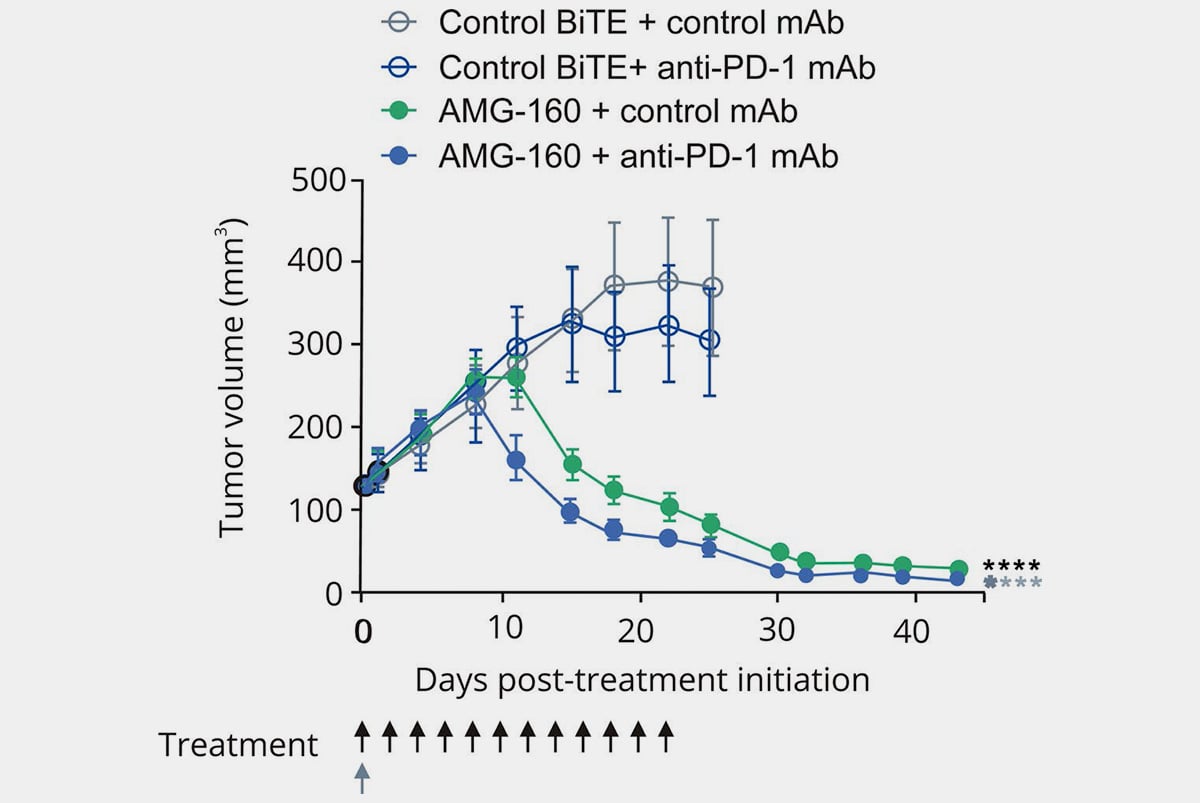
Tumor Growth Data: Metrics on tumor size and response to treatments.
-
Immune Profiling Data: Detailed information on the types and activity of human immune cells within the tumor microenvironment.
-
Pharmacokinetic and Pharmacodynamic Data: Insights into how drugs are metabolized and retained in the model and their effects on both the tumor and immune system.
-
Histopathological Data: Microscopic analysis of tumor tissues, including immune cell infiltration and tumor architecture.
-
Molecular Data: Information on gene expression, protein levels, and genetic mutations within the tumor and surrounding immune cells, aiding in the understanding of treatment mechanisms and resistance.