
Preclinical Oncology
Solid Tumor PDX Models
The most diverse, annotated, and clinically relevant living bank for solid tumor oncology research
Overview
An Essential Platform for Your Oncology Research
Champions TumorGraft® bank is a powerful solution for deriving insights across the entire drug development cycle, from target discovery to clinical research.
Over 1,400 PDX models mirroring the molecular and pathological heterogeneity across all tumor indications
Established from biopsies of patients with advanced-stage disease, heavily pretreated with latest-generation therapies
Extensive clinical annotations and deep multi-omic molecular characterization
Models by tumor indication
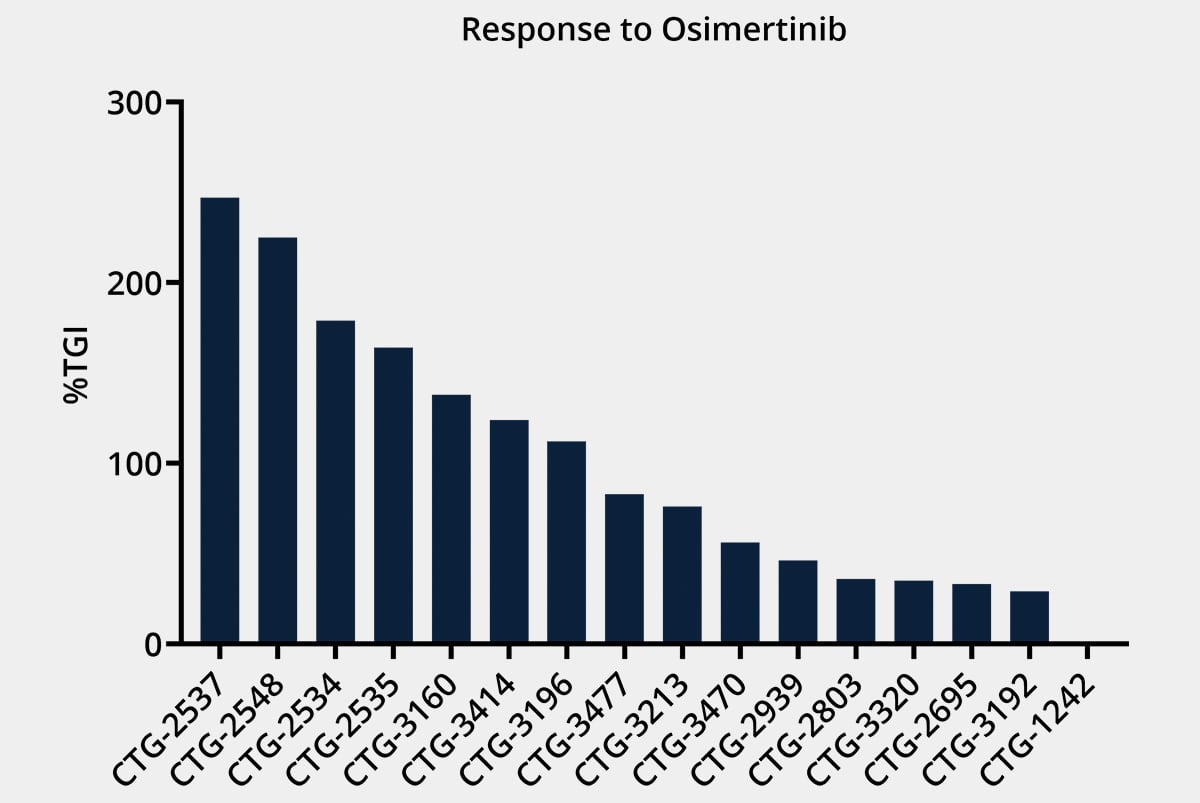
Extensively Annotated & Deeply Characterized Patient-derived Xenograft Models
The extensive clinical annotation of our PDX models, coupled with deep multi-omic molecular characterization and in vivo responses, enable accurate selection of models to enroll into preclinical studies, along with biomarker identification. NGS, proteomics, and phospho-proteomics data are available within Lumin to correlate in vivo and ex vivo responses with molecular and phenotypical features, identify novel biomarkers, and define your strategy for patient stratification.
Comparison
Advantages of PDX Models
Patient-derived xenograft (PDX) models provide a highly accurate representation of human tumors, maintaining the genetic and histological characteristics of the original cancer. These in vivo preclinical mouse models allow for assessing therapeutic efficacy, drug resistance, and generation of translational insights. Unlike traditional xenograft models, PDX models closely mimic patient-specific responses, making them an invaluable tool for developing next-generation cancer therapies and improving clinical outcomes. With their high translational power, PDX tumor models reduce the gap between preclinical studies and clinical success.
PDX Models
Traditional Xenograft Models

Pretreated PDX Models
Testimonials
"We’ve consistently been impressed by the quality of Champions Oncology’s PDX models. Their commitment to high standards and having one of the largest banks of PDX models has helped us achieve more accurate and meaningful results in our preclinical studies."
Senior Scientist, Pharmaceutical Company
"Champions' solid tumor PDX models have been instrumental in advancing our research. We have gained critical insights using their pretreated models, accelerating our drug candidate's development."
Head of Preclinical Research, Biopharma Company
"We’ve consistently been impressed by the quality of Champions Oncology’s PDX models. Their commitment to high standards and having one of the largest banks of PDX models has helped us achieve more accurate and meaningful results in our preclinical studies."
Senior Scientist, Pharmaceutical Company
Resources
Explore our resources
Bench to Bedside Innovations: Understanding Cancer with Patient-Derived Xenografts (PDX)
PDX models have played a pivotal role in advancing oncology research and developing new therapeutics that target the immune system. Here we describe the history of PDX models, how PDX models are evolving, and the benefits and challenges associated with PDX systems.

FAQ
Frequently Asked Questions
CDX (Cell-Derived Xenograft) Models:
-
CDX models involve the implantation of immortalized cancer cell lines (cultured in vitro) into immunodeficient mice.
-
They are more homogeneous because they come from a single cell line, which can make them easier to work with, but less representative of the complexity of human tumors.
-
CDX models often grow faster and are easier to manipulate experimentally.
PDX (Patient-Derived Xenograft) Models:
-
PDX models involve the direct implantation of tumor tissue from a patient into mice.
-
They mimic the heterogeneity and complexity of human tumors, including the tumor microenvironment, making them more relevant for studying tumor biology and drug response.
-
PDX models grow slower than CDX models.
Selecting the right PDX model depends on several factors:
-
Tumor Type and Origin: Choose a PDX model that accurately represents the cancer type and stage you're studying.
-
Genetic Profile: Ensure the PDX model's genetic and molecular profile matches your study's focus, especially if you are investigating specific mutations or pathways.
-
Clinical Annotation: Knowing the clinical and treatment history of the patient informs model selection and data analysis
-
Drug Sensitivity: Some PDX models may have known drug sensitivity profiles, which can guide model selection if you're testing particular therapies.
-
Growth Kinetics: Ensure that the PDX models are readily available or can be sourced in a timeframe that suits your study needs.
-
Previous Data: Consider models with existing data or publications to support their relevance to your research questions.
Champions Oncology established the largest clinically relevant bank of PDX models to enable preclinical cancer research. To start a PDX study with Champions:
-
Initial Consultation: Contact Champions Oncology for a consultation. Discuss your research goals, the type of cancer you're studying, and the kind of data you're looking to generate.
-
Model Selection: Work with our team to select the most appropriate PDX models for your study.
-
Study Design: Collaborate with Champions to design the study, including details on treatment regimens, endpoints, and data analysis.
-
Implementation: Champions will conduct the study, handling the implantation, monitoring, and data collection.
-
Data Analysis and Reporting: Once the study is complete, you'll receive detailed reports with data and insights that can inform your research or drug development process.
By following these steps, you can efficiently start a PDX study with Champions and obtain meaningful data for your cancer research.
Get started