<img alt="" src="https://secure.soil5hear.com/223550.png" style="display:none;">
Select Models
pdx-models

Radiopharmaceutical Development

Build Confidence in Your Radiopharmaceutical Program

From radiochemistry and in-house SPECT/CT imaging to PDX efficacy and biodistribution, Champions Oncology delivers one coordinated, U.S.-based workflow to move from construct to decision faster.

Trusted Partner

A Trusted Partner in Radiopharmaceutical Development

Radiopharmaceuticals are transforming oncology research, offering highly targeted delivery of radiation to tumors with reduced off-target effects. At Champions Oncology, we provide end-to-end support for biopharma companies advancing radiopharmaceutical therapies. Our deeply characterized models and off-the-shelf tissue microarrays enable data-driven model selection and safe target validation—ensuring drugs are tested in the right patient population.

Whether you’re evaluating a novel payload, refining your targeting strategy, or preparing for IND-enabling studies, Champions offers the infrastructure, expertise, and models to move forward with confidence.

Why Radiopharmaceuticals Matter

Radiopharmaceuticals use radioactive isotopes linked to peptides, antibodies, or other targeting agents to diagnose or treat cancer. These therapies allow for:

Precise tumor targeting

Integrated diagnostic and therapeutic strategies (theranostics)

Minimized systemic toxicity

Promising applications in solid tumors and resistant cancers

Non-invasive, longitudinal SPECT/CT imaging tracks tumor targeting and biodistribution over time

Champions supports radiopharmaceutical developers with tools that reflect how these therapies behave in real patients, bridging the gap between discovery and clinic.

iStock-1172199122

The Difference

What Sets Champions Apart

Models

PDX + Radiopharma

We are the only preclinical CRO to pair radiopharmaceutical testing with clinically annotated patient-derived xenograft (PDX) models, representative of today's clinical trial population, delivering unmatched translational relevance.

Our PDX platform captures both intra- and inter-tumor heterogeneity, mirroring the diversity of the real-world patient population. This allows for a more nuanced understanding of targeting performance, efficacy, and variability. We also offer tissue microarrays (TMAs) from our model library to assess target expression across a broad range of tumor types prior to proceeding in vivo
Imaging

In-House SPECT/CT Imaging

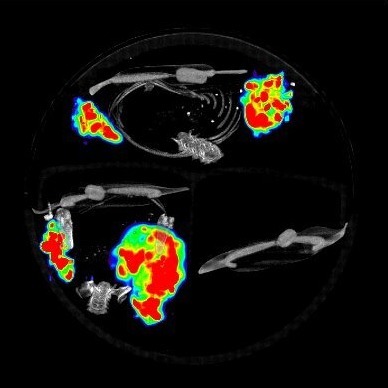
See exactly where your compound goes and when. Our in-house Molecubes γ-X CUBE micro-SPECT/CT system delivers longitudinal, non-invasive imaging of tumor targeting and biodistribution, without sending samples or scans to a third party.

What you get

  • Quantitative outputs: %ID/cc, SUV, and time-activity curve (TAC) analysis
  • Raw DICOMs and co-registered (fused) SPECT/CT images
  • Runs alongside our CDX/PDX catalog and biodistribution studies with one team, one schedule, from radiolabeling through readout

Data

Integrated Clinical Database

Our proprietary PDX database connects molecular data, treatment outcomes, and pharmacology insights across hundreds of patient tumors—helping you select the right models and interpret results in a clinical context. 

Delivery

Full Lifecycle Support

From conjugation to efficacy — now including in-house SPECT/CT imaging — Champions runs complex radiopharmaceutical studies with a seamless handoff from radiochemistry to in vivo, all under one accountable team.

Licensed Isotopes

Alpha-emitting
Actinium-225, Astatine-211*, Lead-212 / Bismuth-212*
Beta-emitting
Yttrium-90, Copper-67, Lutetium-177, Iodine-131*, Terbium-161
SPECT imaging
Indium-111, Lutetium-177, Terbium-161
PET imaging
Gallium-68, Copper-64, Zirconium-89**

*Available on a case-by-case basis, subject to feasibility review. **Handled in limited quantities; typically supported through a qualified partner.

SPECT/CT

From Distribution to Decision: In-House SPECT/CT Imaging

Preclinical radiopharmacology built for translational decisions. One coordinated, U.S.-based workflow spans radiochemistry, longitudinal SPECT/CT imaging, quantitative biodistribution, efficacy, and CDX/PDX model context, so you can move from construct to decision without the delays of multi-vendor handoffs.
spect-ct
© Champions Oncology - Images developed in-house

How it works:

  1. 01

    Plan + Label

    Isotope planning, radiolabeling, and QC, coordinated with your study design
  2. 02

    Read Distribution

    Longitudinal SPECT/CT imaging shows where your compound goes and how it changes over time
  3. 03

    Add Model Context

    Pair imaging with Champions' clinically annotated CDX and PDX models when target expression or tumor biology matter to interpretation
  4. 04

    Decide Next

    Move directly into biodistribution or efficacy follow-up with the same team, without re-onboarding a new vendor

Capabilities

Our Radiopharmaceutical Services

We provide a comprehensive suite of RPT services designed to support early discovery through late-stage validation.

Conjugation & Labeling

We provide small-scale conjugation and radiolabeling services to support early-stage development and screening. Our team ensures reproducibility and quality across a wide range of isotopes and molecular formats.

Includes

  • Conjugation of bifunctional chelators to antibodies, peptides, or fragments

  • Radiolabeling with Lu-177, Ac-225, In-111, Cu-67, Y-90, Pb-212, At-211, Tb-161, Cu-64, Zr-89

PET/CT Imaging

In Partnership with Medicines Discovery Catapult. Champions offers high-resolution, non-invasive PET/CT imaging for biodistribution, receptor occupancy, and tumor targeting studies. This includes:
  • Dynamic and static imaging with quantitative readouts

  • Longitudinal tracking of tracer uptake

  • 3D volumetric outputs analyzed using PMOD software

  • Integrated anatomical and functional data for full spatial context

stock-pet-scan.mp4
particles-virus-cells-floating

How We Work

Flexible Study Design & Realistic Timelines

We understand that every program is unique. Champions offers flexible study designs based on your molecule, goals, and model availability. Our team works with you to: 

  • Define the most appropriate study format
  • Align timelines with regulatory milestones
  • Leverage co-treatments or multi-arm designs where appropriate

We prioritize speed, transparency, and collaboration—so you get the data you need, when you need it. 

Upcoming Webinar

Building the Case for Radiopharmaceuticals: Science, Models, and What Comes Next

September 29, 2026 - 4pm GMT | 11am EST | 8am PT 

In this webinar, Henry VanBrocklin, PhD, and Denis Beckford-Vera, PhD, provide an overview of the radiopharmaceutical landscape, current therapeutic approaches, and key considerations for development. The session also highlights how Champions Oncology supports radiopharmaceutical programs, providing practical insights for pharma and biotech teams working on or exploring these therapies.

This session is designed for drug development and translational teams at pharma and biotech companies working on, or exploring, radiopharmaceutical programs.

Register Now

Resources

Explore our latest resources

pdx-models

Get started

Speak with a Radiopharma Study Expert

Complete the form to discuss your next Radiopharmaceutical Project

FAQs

Frequently Asked Questions

A radiopharmaceutical is a compound that combines a radioactive isotope with a targeting molecule, such as an antibody or ligand. These drugs are used for imaging or therapy, particularly in oncology, to deliver radiation directly to tumors. 

We currently support radiolabeling with Lu-177, Ac-225, In-111, Cu-67, Y-90, Pb-212, At-211, Tb-161, Cu-64, and Zr-89. These are sourced through our licensed facility, enabling dependable access to isotopes that are often difficult to obtain.

Yes. PET imaging and biodistribution studies are available through our partnership with Medicines Discovery Catapult to assess tracer localization and kinetics prior to efficacy testing.

We offer both CDX and PDX models. Models are selected from our proprietary Lumin database, which links multi-omics molecular profiles and treatment responses to improve clinical relevance. 

Radiolabeling involves attaching a radioactive isotope to a compound to track its distribution or evaluate therapeutic effects. It plays a key role in biodistribution studies and preclinical imaging (PET/SPECT/CT), helping researchers understand where a drug goes in the body and how long it stays there. 

Radiolabeled compounds are used to assess tumor targeting, biodistribution, pharmacokinetics, and efficacy. Small animal PET/SPECT/CT imaging and gamma counting provide quantitative data on how well a compound reaches its intended site.

Radioligand therapy is a type of targeted cancer treatment that uses a radiolabeled ligand to bind tumor-specific proteins and deliver cytotoxic radiation. It combines the precision of targeted therapy with the potency of radiation.

Biodistribution refers to how a radiotracer or radiopharmaceutical spreads through the body over time. It’s a critical preclinical metric used to evaluate safety, tumor targeting, and off-target effects.

Preclinical PET, SPECT, and CT imaging allow researchers to visualize and quantify radiotracer uptake in small animal models. These tools are essential for evaluating tumor localization, clearance, and dose optimization.

Gamma counting measures radioactivity in tissue samples and is often used alongside imaging to provide highly sensitive biodistribution data. It’s commonly performed in mouse models to track radiolabeled drug concentrations.

PDX models are used to evaluate how radiopharmaceuticals perform in human-like tumors. They provide more clinically relevant data than traditional models, supporting better prediction of therapeutic efficacy and targeting.

A radiotracer is typically used for imaging purposes and involves very low doses of radioactivity. A radiopharmaceutical may be used for therapy or imaging, and can deliver higher radiation doses intended to destroy cancer cells.

Yes. Our in-house Molecubes γ-X CUBE micro-SPECT/CT system is fully integrated with our radiochemistry and CDX/PDX model workflows — no third-party imaging handoffs required.

Quantitative outputs (%ID/cc, SUV, and time-activity curve analysis), raw DICOMs, co-registered fused images, and optional interpretive reporting or study summaries.

Yes. Imaging, biodistribution, and efficacy can all run within the same coordinated study design, under one team and one schedule.