
Poster
SITC 2025 Poster #316
A Humanized In Vivo Platform for Modeling Primary Acute Myeloid Leukemia to Advance Immunotherapy, Bispecific, and CAR-T Cell Development
Summary
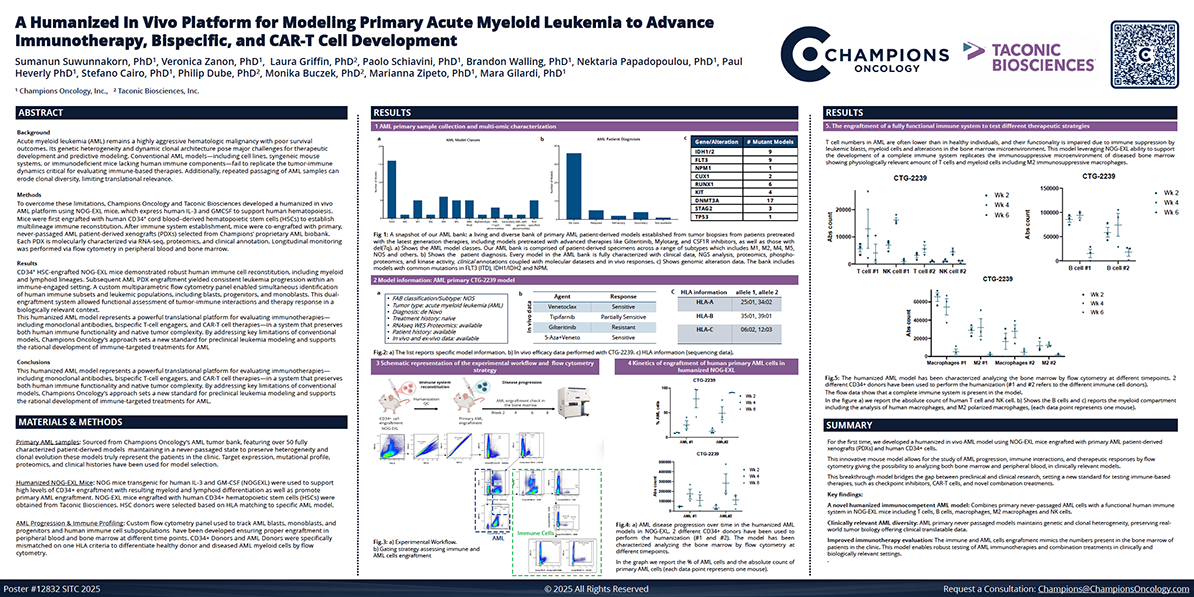
CD34+ HSC-engrafted NOG-EXL mice showed robust myeloid and lymphoid reconstitution. Subsequent AML PDX engraftment produced consistent progression within an immune-engaged microenvironment. A custom multiparametric flow panel identified human immune subsets alongside AML blasts, progenitors, and monoblasts, enabling functional assessment of tumor-immune interactions and therapy response in vivo.
Learning outcomes:
Understand how dual engraftment in NOG-EXL, first CD34+ HSCs then primary AML, preserves human immune functionality while maintaining native AML heterogeneity.
See how longitudinal flow cytometry in bone marrow and peripheral blood quantifies both AML burden and human immune subsets, including T cells, B cells, NK cells, macrophages, and M2 macrophages.
Recognize how the model captures an immunosuppressive marrow context, aligning with patient biology and supporting realistic immunotherapy readouts.
Learn how this platform enables head-to-head testing of immune-based therapies and combinations, with readouts that inform mechanism, dosing strategy, and go or no go decisions.
Identify next steps, such as correlating immune kinetics with efficacy markers and expanding to HLA-aware donor selection to refine translational relevance.