
Poster
AACR 2026 Poster #7214
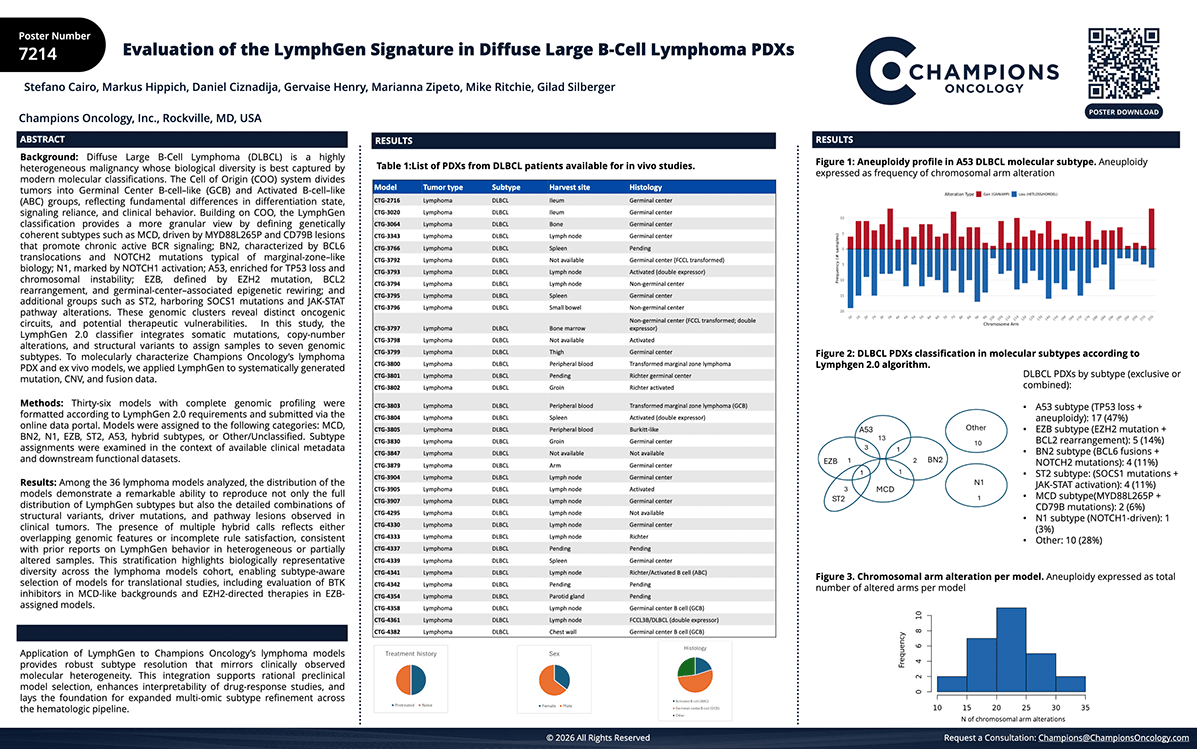
LymphGen-Based Stratification of DLBCL PDX Models Mirrors Clinical Tumor Complexity
Summary
Forty lymphoma models with complete genomic profiling were formatted according to LymphGen 2.0 requirements & submitted via the online data portal. Models were assigned to the following categories: MCD, BN2, N1, EZB, ST2, A53, hybrid subtypes, or Other/Unclassified. Subtype assignments were examined in the context of available clinical metadata & functional datasets.
Among the 40 lymphoma models analyzed, the distribution demonstrate a remarkable ability to reproduce not only the full distribution of LymphGen subtypes but also the detailed combinations of structural variants, driver mutations, & pathway lesions observed in clinical tumors. The presence of multiple hybrid calls reflects either overlapping genomic features or incomplete rule satisfaction, consistent with prior reports on LymphGen behavior in heterogeneous or partially altered samples. This stratification highlights biologically representative diversity across the lymphoma models cohort, enabling subtype-aware selection of models for translational studies, including evaluation of BTK inhibitors in MCD-like backgrounds & EZH2-directed therapies in EZB-assigned models.
Application of LymphGen to Champions Oncology’s lymphoma models provides robust subtype resolution that mirrors clinically observed molecular heterogeneity. This integration supports rational preclinical model selection, enhances interpretability of drug-response studies, & lays the foundation for expanded multi-omic subtype refinement across the hematologic pipeline.