
Poster
AACR 2026 Poster #4868
Modelling glioblastoma sensitivity to irradiation with a patient derived xenograft-derived 3D platform
Summary
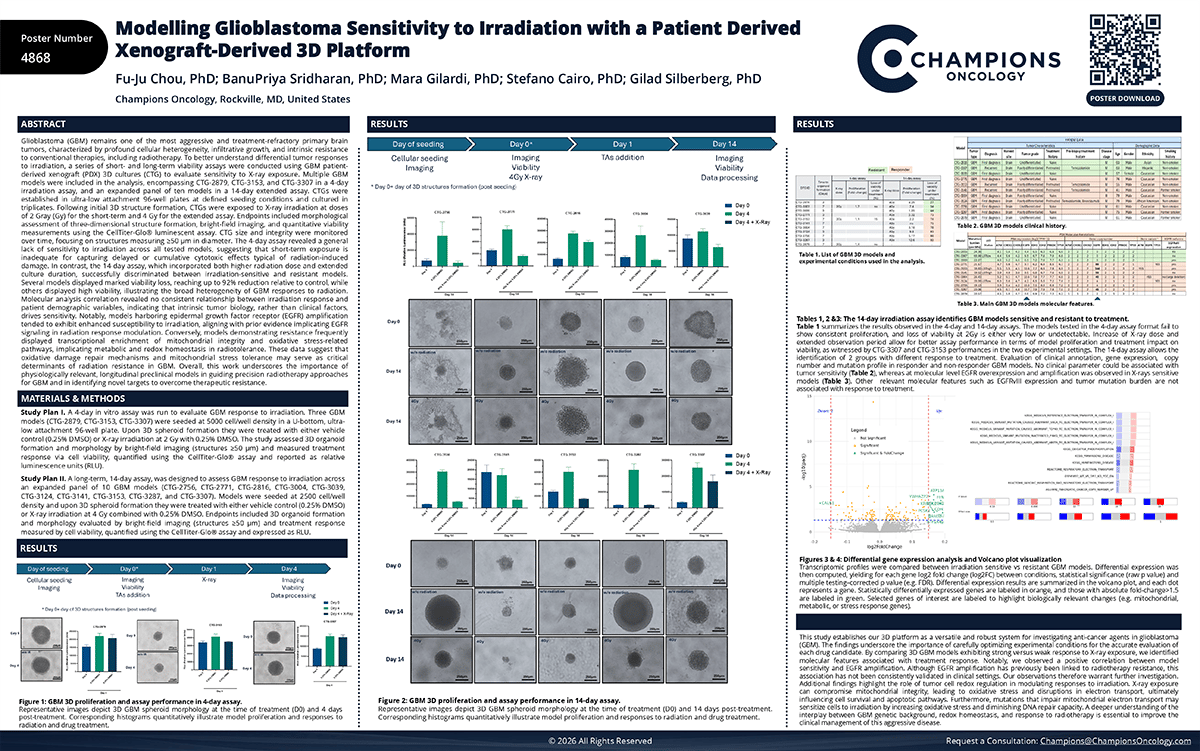
In contrast, the 14-day assay, which incorporated both higher radiation dose & extended culture duration, successfully discriminated between irradiation-sensitive & resistant models. Several organoids displayed marked viability loss, reaching up to 92% reduction relative to control, while others displayed high viability, illustrating the broad heterogeneity of GBM responses to radiation. Analysis of molecular correlates revealed no consistent relationship between irradiation response and patient demographic variables, indicating that intrinsic tumor biology, rather than clinical factors, drives sensitivity. Notably, models harboring epidermal growth factor receptor (EGFR) amplification tended to exhibit enhanced susceptibility to irradiation, aligning with prior evidence implicating EGFR signaling in radiation response modulation. Conversely, models demonstrating resistance displayed transcriptional enrichment of mitochondrial integrity and oxidative stress-related pathways, implicating metabolic and redox homeostasis in radiotolerance.
These data suggest that oxidative damage repair mechanisms and mitochondrial stress tolerance may serve as critical determinants of radiation resistance in GBM. Overall, this work underscores the importance of physiologically relevant, longitudinal preclinical models in guiding precision radiotherapy approaches for glioblastoma and in identifying novel targets to overcome therapeutic resistance.