

Clinically Relevant DLBCL Models with Key Mutations & Molecular Characteristics
Evaluate your Diffuse Large B-Cell Lymphoma drug candidates on our advanced in vivo screening platform, which features a comprehensive bank of 20 pretreated and treatment-naïve lymphoma PDX models, 17 of them DLBCL. Our carefully curated collection includes models treated with advanced cancer therapies like CAR-T, DICE, and EPOCH. Significantly, the CTG-3800 model featured in the screen is derived from a patient who did not respond to R-CHOP or EPOCH prior to collection, and remained non-responsive to rituximab-obinutuzumab, DICE, and methotrexate post-collection, making it a clinically relevant model for testing novel agents against treatment-resistant disease.
Clinically Relevant Models
Living bank of 20 clinically relevant PDX models with key mutations and molecular characteristics.
Pretreated PDX Models
Pretreated with standard-of-care regimens such as R-CHOP
Multi-omic Characterization
Clinical annotations coupled with molecular datasets and in vivo responses
Champions' leading DLBCL In Vivo Screen showcases a panel of 20 lymphoma PDX models, 17 of them DLBCL, each reflecting key clinical characteristics, mutations, and pretreatment history.
-
Derived from patients who received therapies including CAR-T, DICE, and EPOCH, before or after tumor collection
-
Includes models with documented resistance histories to standard-of-care regimens such as R-CHOP and EPOCH, with treatment history tracked separately for pre-collection and post-collection therapy.
-
Extensive characterization, including clinical data, NGS, and proteomics for selected models.
-
Several endpoint data options available including Flow Cytometry and IHC to quantify target expression and critical phenotypical changes (available upon request).
-
Terminal tumor collections for target validation is available upon request (Snap Frozen/FFPE)
-
No minimum to enroll & 50% off a Standard of Care Agent arm (selected by Champions)
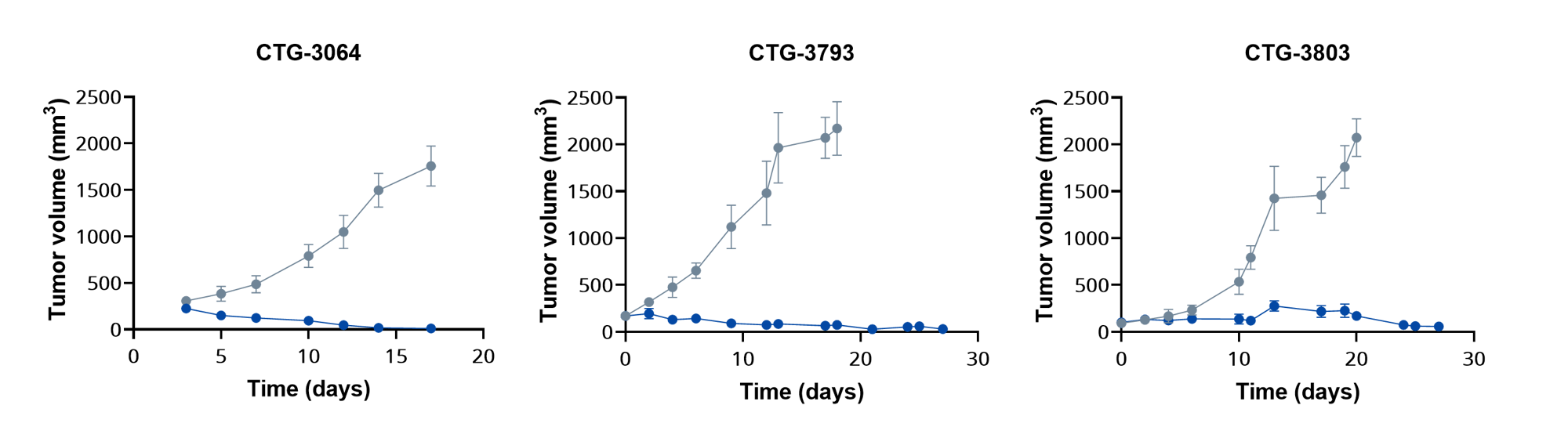
Treatment responses of three DLBCL PDX models, CTG-3064, CTG-3793, and CTG-3803, to standards-of-care.