Download Champions' SITC 2023 Poster
Development of a Non-small cell lung cancer PDX model in a myeloid-boosted humanized host highlights a M2 polarization phenotype within the myeloid compartment
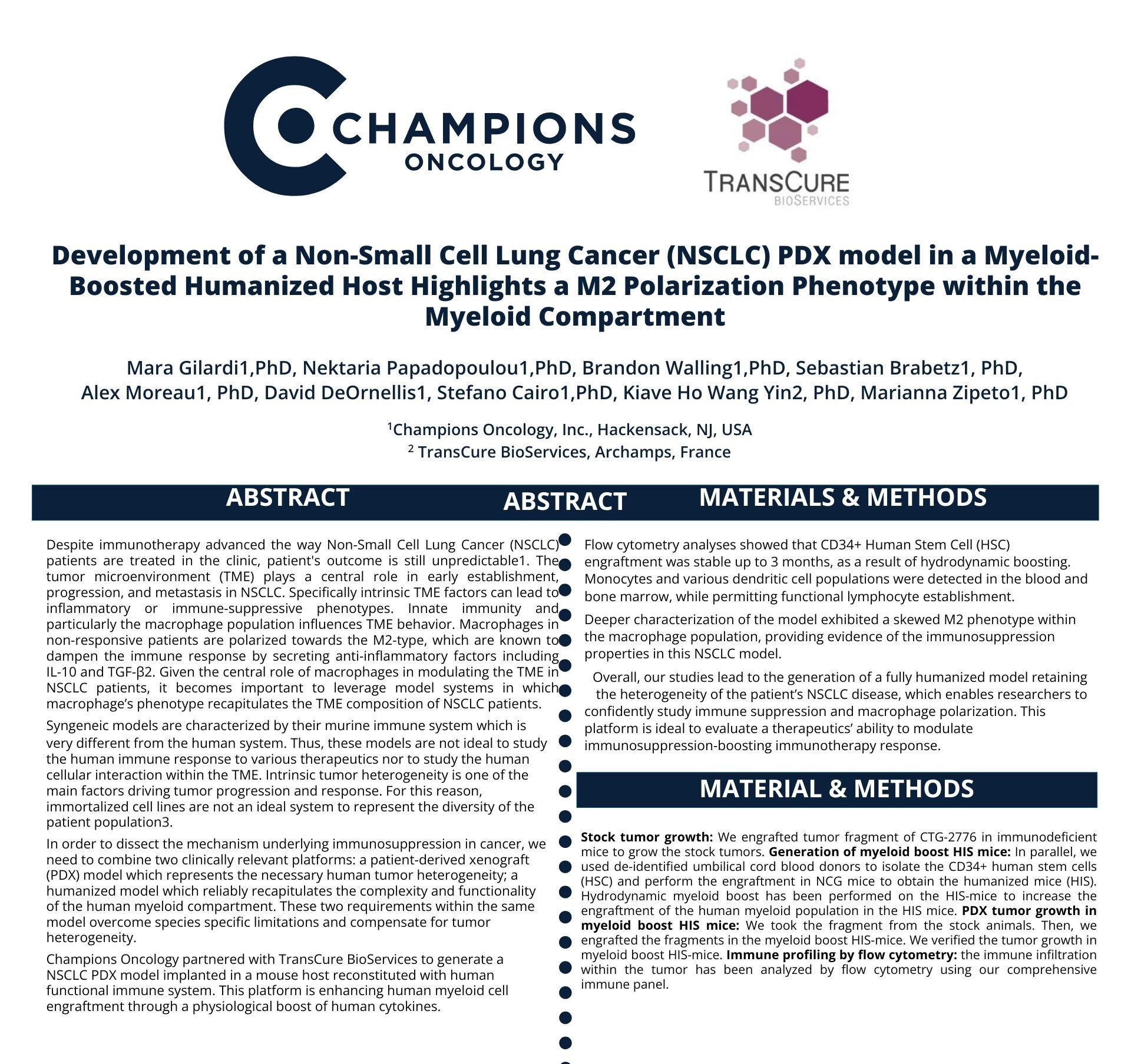
Despite advances in immunotherapy for Non-Small Cell Lung Cancer (NSCLC), patient outcomes remain unpredictable. The tumor microenvironment (TME) plays a key role in tumor development and metastasis, with intrinsic TME factors driving inflammatory or immune-suppressive phenotypes. Macrophages, particularly M2-type macrophages, are crucial in non-responsive patients, as they suppress immune responses through anti-inflammatory factors like IL-10 and TGF-β2. To better understand and target the TME in NSCLC, it's essential to use model systems that accurately reflect the macrophage-driven TME of patients.
-
Champions Oncology partnered with TransCure BioServices to develop an NSCLC PDX model in a mouse host reconstituted with a human functional immune system, enhancing human myeloid cell engraftment via human cytokines.
-
To explore the mechanisms of immunosuppression in cancer, the model combines two clinically relevant platforms: a patient-derived xenograft (PDX) model for tumor heterogeneity and a humanized model for myeloid compartment functionality.
-
This dual-platform approach overcomes species-specific limitations and addresses tumor heterogeneity, providing a more accurate model for studying immunosuppression in cancer.